
In short
Recirculating water can be useful, but the crop still needs light, nutrients, space and care. Choose a crop to fit the system you can maintain. Start by distinguishing aquaponics, which includes fish and biological treatment, from hydroponics supplied with a formulated nutrient solution.
Recirculating water can be useful, but the crop still needs light, nutrients, space and care. Choose a crop to fit the system you can maintain. Start by distinguishing aquaponics, which includes fish and biological treatment, from hydroponics supplied with a formulated nutrient solution.
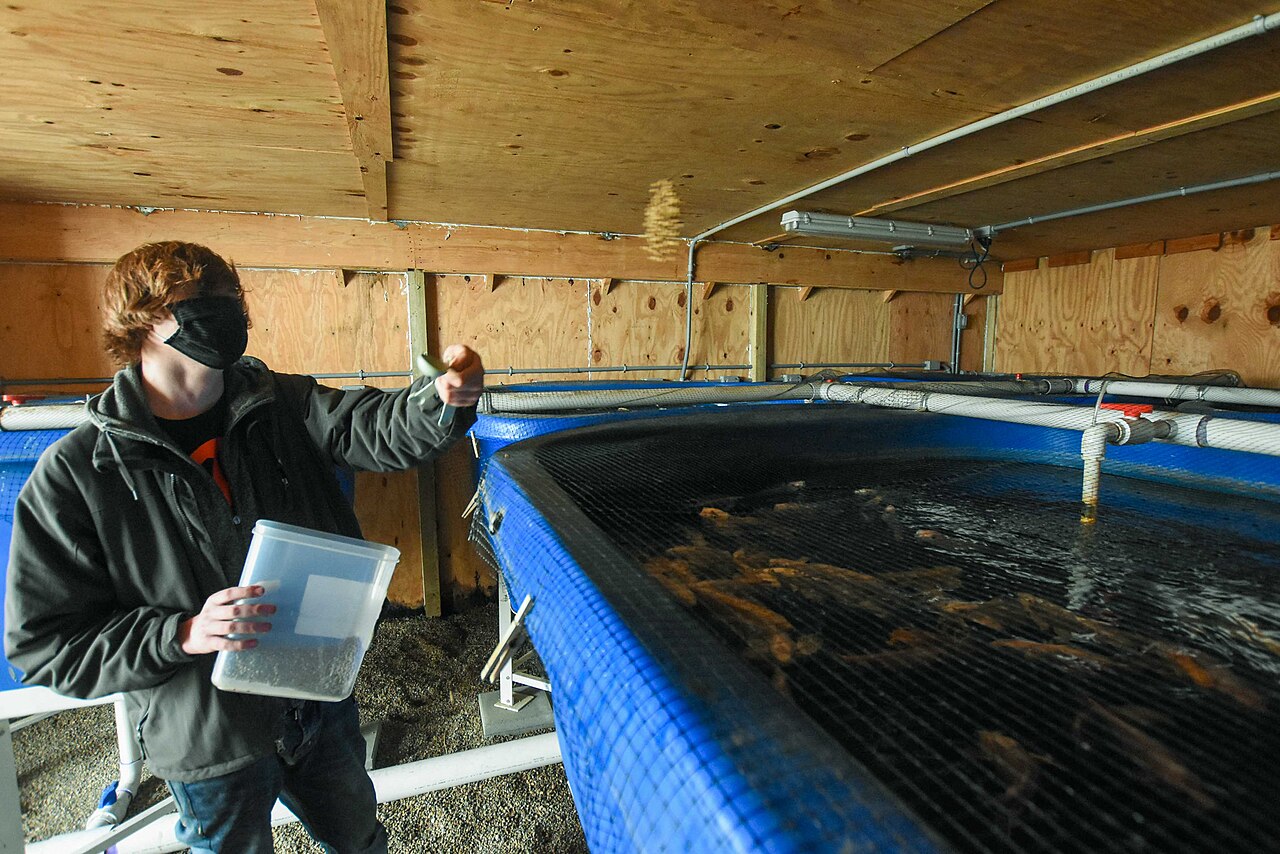

From the Namibian discussions
A Namibian discussion asked about growing lucerne in aquaponics, partly because lucerne can require substantial water in field production. The saved exchange did not provide a measured water comparison or harvest result. It is a worthwhile research question, not an established shortcut to cheap fodder.
Define the product and scale
Are you producing household salad, saleable herbs or kilograms of livestock fodder? Those goals require different quantities and economics. List the expected harvest, growing period and available space. A small demonstration of plant growth does not establish a system’s ability to supply an animal ration.
Match the crop to the system
The FAO manual discusses plant selection alongside fish and water management. Consider root space, support, nutrient demand and temperature. Avoid adding fish feed simply to force plant growth if the fish or treatment system cannot safely accommodate it. Seek advice on any nutrient deficiency.
Measure total inputs
- Record all replacement water, including cleaning and accidental losses.
- Record electricity, nutrients or fish feed and daily labour.
- Weigh usable harvest separately from discarded material.
- Compare like with like: fresh fodder contains much more water than dry feed.
Test one manageable crop first
Run a small crop through harvest before adding complexity. Keep a backup plan for pump failure and a way to check water conditions. Compare with a sensible soil-grown option if that is the real alternative. The best system may be the one you can keep operating reliably through the difficult season.
Namibian climate and microclimate
Evaporation and plant water use continue even when water recirculates. Hot Namibian conditions, cold nights and power reliability can change the balance. Include shade and protection costs rather than assuming a system shown indoors elsewhere will work unchanged outside.
Your first practical step
Choose one crop and write the harvest and total-water measurements that would make a local trial useful.
Keep exploring
Sources and further reading
Have you tried this in Namibia? Share the site conditions, method and result—including what did not work—with the Living Earth community. Local observations help the next person adapt the idea.
Documents to read or download
Worthwhile videos
Made by others, mostly outside Namibia: watch for the idea, then adapt it to our dry climate.
Watch: Oklahoma Gardening: aquaponics and hydroponics systems
Publisher: Oklahoma State University / OETA
Country and context: USA; Oklahoma.
The opening visit shows managed soilless production. It is a supporting systems lesson, not an aeroponic tower build; a transcript is available.
Compare the system principles, then test crop choice and operating costs under your own conditions. The film is not evidence for lucerne production in Namibia.
Keep exploring
Backyard Aquaponics
Aquaponics is THE key ingredient in our plan to live sustainably in Namibia! It allows us to produce a lot of food…
Terraponics
Some plants, like root crops, like to live in soil and not in a soilless medium like clay pebbles or gravel as…
Fish feed
We can grow all our own fish food. Photo by Alexey Demidov: Feeding fish in an aquaponics system is a critical part…
Chinampa
Happy fish eating mosquito larvae and duck weed -. A chinampa is a traditional Mesoamerican agricultural system used to grow crops in…